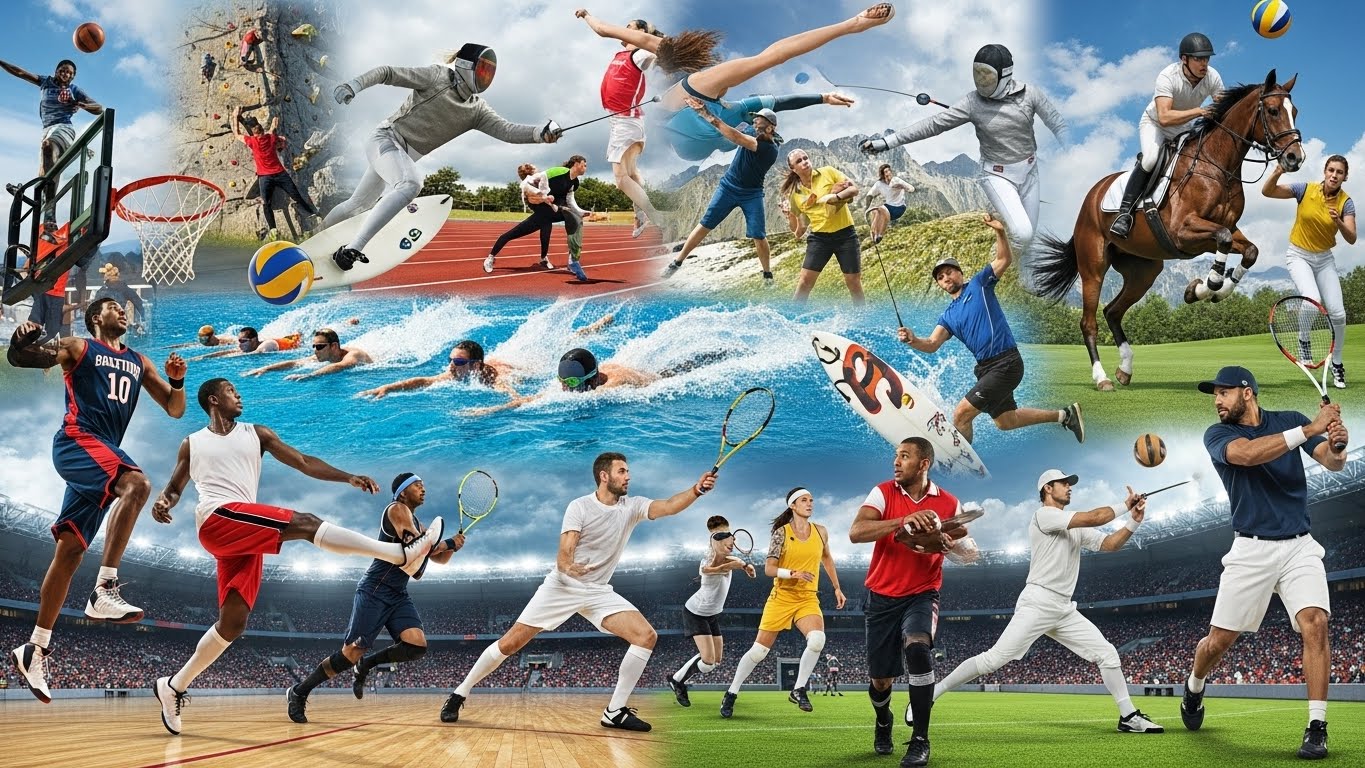

Sports are an undeniable force in the world, transcending boundaries of language, culture, and geography. From local playgrounds to massive international arenas, they play an essential role in the lives of millions. The evolution of sports has mirrored societal changes, growing from informal games to massive global spectacles. More than just competitions, sports offer a unique space where the values of teamwork, perseverance, and unity are celebrated. In this blog post, we will explore how sports have shaped lives, impacted cultures, and continue to be a powerful unifying force across the world.
The Early Roots: Sports as Rituals and Recreation
The origins of sports are deeply rooted in ancient civilizations, where athletic activities were not just for leisure, but also for practical purposes such as preparing warriors for battle or demonstrating strength and courage. In Ancient Greece, athletic competitions were linked to religious worship, with the Olympic Games established in 776 BCE as a tribute to the gods. These early games celebrated human excellence and were a showcase for physical prowess, with the winners receiving olive wreaths as the highest honor.
In other ancient cultures, such as Egypt and Mesopotamia, sports like wrestling, archery, and chariot racing held symbolic significance. These activities often reflected the values of the society—strength, skill, and honor—and served to unite people through shared rituals. Over time, these informal contests began to evolve, laying the groundwork for the organized sports we know today.
The Birth of Modern Sports: A 19th-Century Revolution
While the concept of sports had existed for centuries, it was in the 19th century that modern sports, as we know them, began to take shape. During the Industrial Revolution, social and economic changes created a new context for the development of structured competitions. The rise of urban centers and improved transportation allowed people to gather for competitions on a larger scale, leading to the creation of sports leagues and governing bodies.
In England, the mid-1800s saw the birth of football (soccer) with the formation of the Football Association in 1863. This was a pivotal moment in the history of sports, as it introduced standardized rules that helped propel the sport into an international phenomenon. Rugby, also developed in England during this period, soon spread to countries like New Zealand and South Africa, further solidifying the global reach of organized sports.
Across the Atlantic, the United States saw the rise of baseball as its national pastime, while tennis, athletics, and cricket began to gain popularity in other parts of the world. These sports were not only a means of recreation but became central to national identity and pride. As the 19th century came to a close, sports had firmly established themselves as a major component of modern life.
The Globalization of Sports: Breaking Boundaries in the 20th Century
The 20th century marked a dramatic shift in the way sports were consumed and experienced. With the advent of mass media, particularly television, sports became a global spectacle. Events that were once confined to local or national audiences began to attract viewers from all corners of the world. This era of globalization brought with it an unprecedented level of exposure, allowing sports to transcend national borders and reach millions of fans.
Iconic moments in sports history, such as the first televised World Cup in 1954 or the Olympic Games, showcased how powerful sports could be in uniting people from diverse backgrounds. Legends like Muhammad Ali, Pelé, Michael Jordan, and Serena Williams became household names, admired not only for their athletic ability but for their personal stories of overcoming adversity and pushing the limits of human achievement.
With the growth of international competitions like the FIFA World Cup, the Summer and Winter Olympics, and the Super Bowl, sports became more than just games—they became events that united the world in shared celebration and competition. Athletes were no longer just local heroes; they became global symbols of perseverance and excellence.
Sports as a Reflection of Society: More Than Just Competition
While sports have long been about competition, they have also served as a mirror of society, reflecting the values, challenges, and issues of the time. Sports have historically been a platform for social change, as athletes have used their positions to challenge inequality and push for justice.
One of the most powerful examples of this came in the 1960s, when athletes like Muhammad Ali used their platform to protest the Vietnam War and advocate for civil rights. In the United States, Jackie Robinson’s breaking of the color barrier in Major League Baseball in 1947 was a landmark moment, not just in sports, but in the fight for racial equality. More recently, athletes like Colin Kaepernick have used their status to protest police brutality and racial injustice, proving that sports can be a powerful tool for social activism.
Sports also help to break down societal barriers. For women, sports have become an arena for empowerment. The rise of female athletes, such as Billie Jean King, Serena Williams, and Simone Biles, has challenged traditional gender norms and demonstrated that women can excel in all areas of athleticism. As sports continue to evolve, they provide an essential space for promoting inclusivity, whether it be through gender equality, racial diversity, or the inclusion of people with disabilities.
The Future of Sports: Technology and Innovation
As we look to the future, technology is poised to radically transform the way we experience sports. Advances in virtual reality (VR) and augmented reality (AR) are providing fans with immersive ways to interact with events, allowing them to experience games from different perspectives, whether by watching from a virtual seat in the stadium or exploring player stats in real-time through AR applications.
Wearable technology is changing the way athletes train and compete. Devices that track heart rate, movement, and recovery are helping athletes optimize their performance and reduce the risk of injury. In addition, esports—competitive video gaming—has emerged as a new frontier in the world of sports. With its growing popularity, esports is not only creating a new avenue for fans but also bridging the gap between traditional sports and digital entertainment.
Another key development is the growing focus on sustainability. As global awareness of climate change increases, the sports industry is taking steps to minimize its environmental impact. From eco-friendly stadiums to carbon offset initiatives for major events, the future of sports will likely involve a stronger emphasis on green practices and sustainability.
Conclusion: The Enduring Power of Sports
Sports have always been about more than just winning or losing. They are a powerful tool for personal growth, community building, and social change. From their humble origins in ancient civilizations to their status as global spectacles, sports have evolved into an integral part of human culture. They reflect our values, our struggles, and our dreams, offering a platform for excellence, unity, and transformation.
As the world continues to change, sports will undoubtedly continue to evolve. New technologies, new platforms, and new ideas will shape the way we play, watch, and engage with sports. But one thing will remain constant: the power of sports to bring people together, transcend differences, and inspire us to reach for greatness.