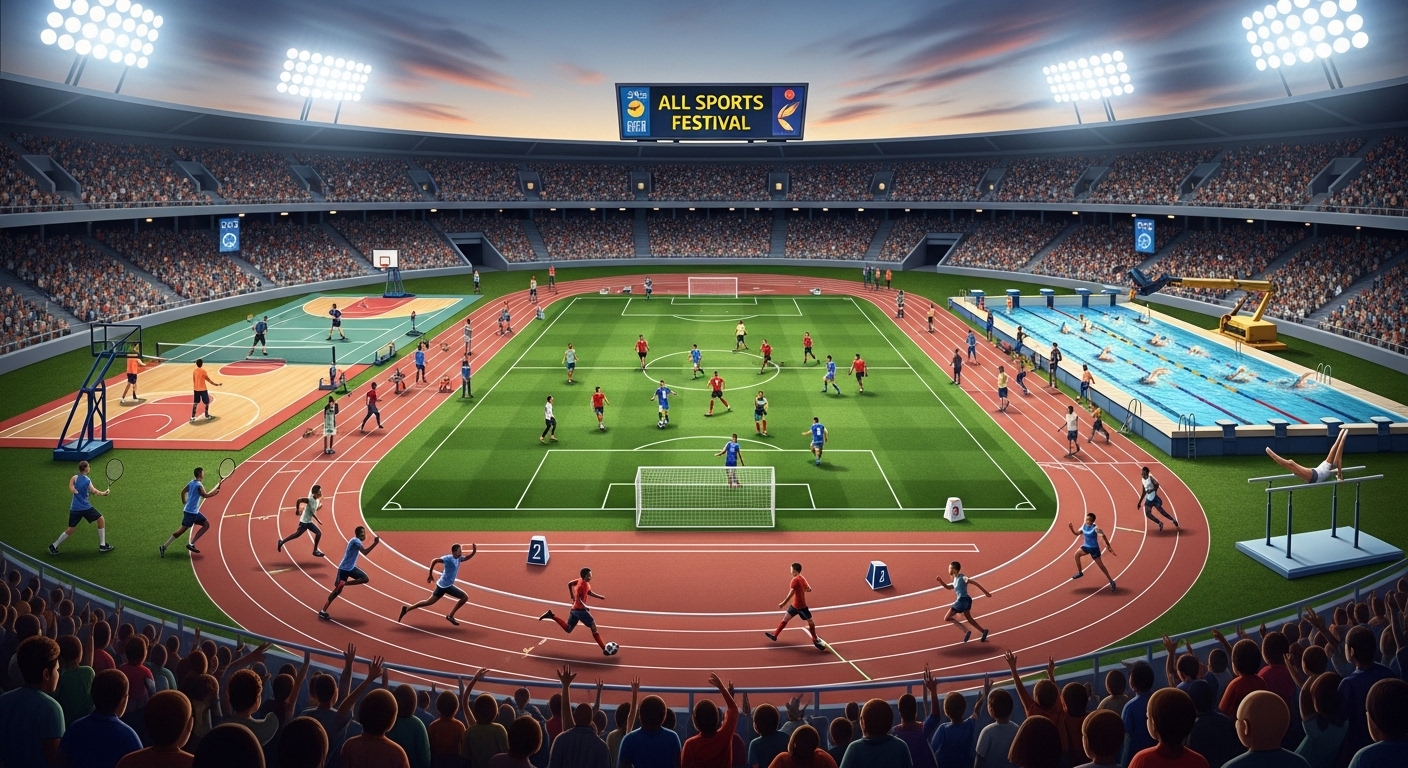
Sports have been a cornerstone of human civilization for thousands of years. From the ancient Olympic Games in Greece to the dazzling spectacles of modern international tournaments, sports embody the human spirit—our desire to compete, to excel, and to connect. The field of sports is not just about athletes running faster or jumping higher; it’s about cultural identity, social transformation, innovation, and the unifying power of passion.
As time progresses, the world of sports continues to evolve. Rules change, technology advances, and new heroes emerge. Yet, one thing remains constant: the emotional power that sports hold over billions of people across the globe. Whether it’s a child dribbling a soccer ball on a dusty field, a swimmer training before sunrise, or a packed stadium roaring in unison, sports remind us that greatness is not confined to one place or person—it’s universal.
The Roots of Sports: A Journey Through History
Sports began as more than mere recreation. In ancient civilizations, athletic contests were tied deeply to rituals, religion, and warfare. The earliest known sporting activities date back thousands of years, with evidence of running, wrestling, and throwing competitions in ancient Egypt, Mesopotamia, and China. The Greeks, however, were the ones who transformed sports into a celebration of physical excellence and civic pride.
The first recorded Olympic Games were held in Olympia in 776 BC. These games brought together athletes from across the Greek world to compete in events like discus, javelin, and chariot racing. For the Greeks, sports were not simply about entertainment but about achieving arete—a concept of excellence that combined physical strength, moral virtue, and intelligence.
As the centuries passed, the Roman Empire adopted and adapted Greek sports traditions, though with more emphasis on spectacle and entertainment. Gladiatorial combat, chariot races, and athletic games in massive arenas became central to Roman public life. Later, in medieval Europe, sports took on new forms—jousting, archery, and fencing reflected the martial values of the time.
By the time the Renaissance arrived, organized sports began to resemble their modern counterparts. The revival of the Olympic spirit in the 19th century, led by Baron Pierre de Coubertin, gave birth to the modern Olympic Games, first held in Athens in 1896. Since then, sports have become a global phenomenon, transcending culture, class, and geography.
The Cultural Power of Sports
Sports are much more than physical contests—they are cultural expressions. Each sport carries with it the heritage and values of the people who created it. For example, football, or soccer, reflects the communal and democratic spirit of global society; cricket mirrors strategy and patience; basketball celebrates speed, creativity, and flair.
National identities often find expression through sports. A nation’s team can become a symbol of pride and unity, especially during times of political or social turmoil. The 1995 Rugby World Cup, for instance, played a pivotal role in uniting post-apartheid South Africa under Nelson Mandela’s vision of reconciliation. Similarly, when India won the 1983 Cricket World Cup, it marked not just a sporting triumph but a moment of cultural awakening for a young nation asserting its place on the global stage.
Sports also act as a global language that transcends linguistic and cultural barriers. Fans from different corners of the world may not share a common tongue, but they share the same excitement when witnessing a stunning goal, a last-second basket, or a record-breaking sprint. This universality gives sports a rare and powerful ability to bring humanity together, even in divided times.
The Science and Technology Revolution in Sports
In the modern era, science and technology have revolutionized how athletes train, how games are played, and how audiences engage. Today’s sports are a blend of physical mastery and scientific precision.
Athletes now use data analytics to optimize performance. Coaches rely on video analysis, biometric monitoring, and AI-driven insights to design personalized training programs. Sports medicine has advanced dramatically, allowing players to recover faster from injuries that once ended careers. Nutritional science, biomechanics, and psychology have become integral components of athletic preparation.
Technology has also transformed how fans experience sports. High-definition broadcasting, virtual reality, and real-time statistics have brought the action closer to viewers than ever before. Drones capture breathtaking aerial views of games, while wearable sensors track every heartbeat and stride. Even the officiating of games has evolved—video assistant referees and goal-line technologies ensure greater fairness and accuracy.
Perhaps most intriguing is the rise of eSports—competitive video gaming that has turned into a billion-dollar industry. Once dismissed as entertainment for hobbyists, eSports now feature professional athletes, global tournaments, and massive fan followings. It represents a new frontier in the definition of sports—one where digital skill, reflexes, and strategy rival traditional athleticism.
The Business of Sports: A Global Economic Force
Behind every game, there lies a vast economic engine. The sports industry today is a multi-trillion-dollar global enterprise, encompassing broadcasting rights, sponsorships, merchandising, and tourism. Major sporting events such as the FIFA World Cup, the Olympic Games, and the Super Bowl attract not only fans but also corporations eager to associate with the excitement and prestige of competition.
Athletes have become global brands. Figures like Lionel Messi, Serena Williams, LeBron James, and Usain Bolt are not just champions in their respective sports—they are cultural icons who influence fashion, philanthropy, and social movements. Endorsements, social media presence, and personal branding have become essential components of an athlete’s career.
Cities and nations invest heavily in hosting major sporting events, seeing them as opportunities for economic growth, global visibility, and national pride. Infrastructure development, tourism boosts, and global media coverage can significantly transform a region’s profile. However, this economic dimension also brings challenges—questions about sustainability, corruption, and the real benefits for local communities continue to spark debate.
Sports and Social Change: The Power to Inspire
Throughout history, sports have served as a catalyst for social change. Athletes often use their platform to speak out against injustice, inequality, and discrimination. One of the most iconic examples came during the 1968 Mexico City Olympics when sprinters Tommie Smith and John Carlos raised their fists in a Black Power salute—a gesture that became an enduring symbol of the fight for civil rights.
In more recent years, movements such as “Take a Knee” in American football, led by Colin Kaepernick, have reignited global conversations about racial injustice and freedom of expression. Female athletes have also played a crucial role in advocating for gender equality and fair treatment. The rise of women’s sports—from soccer to tennis to mixed martial arts—represents not just progress in athletics but progress in society as a whole.
Sports can break barriers in ways that politics often cannot. The 1990 “Ping Pong Diplomacy” between the United States and China helped ease Cold War tensions, proving that a simple exchange of athletes could open the door to dialogue and cooperation. Similarly, the Paralympic Games have reshaped perceptions of disability, celebrating ability, determination, and human dignity.
The Role of Media in Shaping Sports Culture
Media has always been an inseparable part of sports. The way we consume, interpret, and celebrate sports is deeply influenced by how they are presented to us. From the early days of radio broadcasts to today’s digital streaming platforms, the media has turned sports into a 24-hour global spectacle.
Sports journalism gives fans access to stories beyond the scoreboard—the triumphs, the heartbreaks, and the personal journeys of athletes. Documentaries and biographies allow fans to understand the grit and sacrifice behind every victory. Meanwhile, social media has transformed athletes into direct communicators, allowing them to engage with fans without filters or intermediaries.
However, this media-driven era also brings complexities. The constant spotlight can create pressure and scrutiny, sometimes invading athletes’ privacy. The commercialization of sports media, while profitable, can sometimes prioritize sensationalism over substance. Despite these challenges, the media remains the most powerful bridge between athletes and audiences, turning every match into a shared experience.
The Emotional Landscape of Sports: Triumph and Tragedy
Every athlete, no matter how great, knows that sports are as much about loss as they are about victory. The unpredictability of competition is what gives sports their drama and beauty. A last-minute goal, a photo-finish race, or an unexpected underdog triumph can ignite emotions that linger for decades.
The psychology of sports plays a profound role in shaping not only performance but also resilience. The mental strength to handle pressure, recover from defeat, and maintain focus under immense expectations often separates the good from the great. Sports psychology has grown into a vital discipline, helping athletes navigate the emotional rollercoaster that comes with competition.
Fans, too, share in this emotional journey. The loyalty of sports supporters is unmatched—they celebrate, cry, and hope alongside their teams. For many, sports become a refuge, a source of identity, and a way to connect with others. A single match can unite generations within a family or communities across the world. It’s this emotional connection that makes sports timeless.
The Future of Sports: Innovation, Inclusion, and Integrity
As we move deeper into the twenty-first century, sports face both unprecedented opportunities and challenges. Technological innovations will continue to reshape the way athletes train and how fans engage. Artificial intelligence, augmented reality, and data analytics are poised to make sports more interactive and precise than ever.
Inclusivity will also define the future of sports. The growing recognition of women’s leagues, adaptive sports for people with disabilities, and initiatives for LGBTQ+ inclusion mark a new era of diversity. Sports governing bodies are being called upon to ensure fair pay, representation, and equal opportunity for all athletes, regardless of background or gender.
Yet, challenges persist. Issues like doping, corruption, match-fixing, and commercial exploitation threaten the integrity of sports. The balance between entertainment and authenticity remains delicate. For sports to continue inspiring future generations, ethics and fairness must remain at the core of competition.
Sustainability has also become a pressing concern. With major sporting events consuming vast resources, there’s a growing call to make sports more environmentally responsible. Stadiums powered by renewable energy, eco-friendly apparel, and reduced carbon footprints are becoming part of the global sports conversation.
Sports as a Reflection of Humanity
At its heart, sports mirror the human condition. They reveal our strengths, our flaws, and our aspirations. Every victory symbolizes the power of discipline and dedication; every defeat teaches humility and resilience. Sports bring out the best and sometimes the worst in us, but always remind us of what it means to strive.
Athletes become symbols of human potential. They embody perseverance, passion, and the pursuit of excellence. Whether it’s a marathon runner collapsing at the finish line, a gymnast perfecting a routine after years of practice, or a team overcoming the odds to win a championship, these moments become part of our collective memory.
What makes sports truly remarkable is that they never remain static. New generations reinterpret them, new technologies redefine them, and new stories reenergize them. But the essence—the human drive to compete, to challenge limits, and to connect—remains eternal.
Conclusion: The Timeless Spirit of Sports
Sports are more than games; they are living stories of human endeavor. They capture the highs and lows of existence, blending art, science, and emotion into a single, compelling narrative. From the ancient arenas of Greece to the digital stages of eSports, the core message remains unchanged: greatness is within everyone who dares to dream, train, and persevere.
As we look to the future, the world of sports will continue to grow and adapt, guided by technology, inclusivity, and an unyielding sense of hope. New champions will rise, new records will fall, and new generations will find inspiration in the heroes of their time.
Sports remind us that no matter how divided the world may seem, there is still something that unites us all—the shared heartbeat of competition, the pursuit of excellence, and the unbreakable spirit of play.
In every cheering crowd, every dusty playground, and every medal raised high, we see ourselves—not just as spectators but as participants in the grand, ongoing story of humanity.
Because when the whistle blows, and the game begins, we are reminded of one simple truth: sports are life in motion.